
Questão de Languages, Codes and their Technologies #019e354a
TEXT I
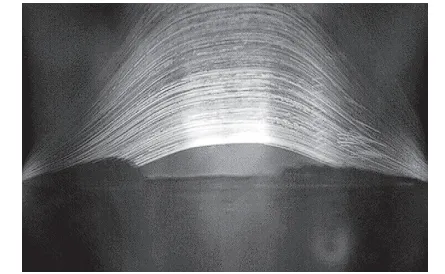
The experiment conducted by Regina Valkenborgh resulted in the understanding that...
Alternative photographic techniques limit image recording.
Appreciation of nature depends on photographic documentation.
Artistic creativity stems from scientific knowledge.
Homemade cameras have technological value.
Artistic production can be the result of chance.
Explicação Oficial / Explicações da Comunidade
Analysis of Regina Valkenborgh's Experiment
The correct answer is option A. E) Artistic production can be the result of chance.
1. Analysis of the Central Event
The crucial point of the story described in Text I is not the technique, the scientific knowledge, or the artistic intention, but rather the... unexpectedThe narrative clearly highlights that the camera was set up for a specific project, but the extraordinary result was only achieved because... "the can was forgotten".
The sentence "This forgotten project ended up revealing the photo..." This is the key to interpretation. It shows that the artwork was not the result of a meticulous eight-year plan, but rather an accident, a lapse, a mistake. by chanceThe student's original intention was overtaken by an unplanned event, which ended up generating a unique and record-breaking artistic production.
2. The Relationship Between Chance and Art
This case perfectly illustrates how the creative process is not always linear or entirely controlled. Accidents, mistakes, and chance can play a fundamental role in artistic creation, leading to unexpected and sometimes more interesting results than planned. Valkenborgh's story is a literal example of how art can emerge from serendipity.
3. Evaluation of Other Alternatives
-
A) The alternative photographic technique limits the recording of images: Incorrect. The text demonstrates the opposite: the simple, "low-tech" technique allowed for a unique and extremely long-lasting recording, something that would not be easily achieved with conventional equipment.
-
B) The appreciation of nature depends on photographic documentation: Incorrect. The text makes no general statement about the appreciation of nature; it focuses on the specific process of creating the photograph.
-
C) Artistic creativity stems from scientific knowledge: Incorrect. Although the creation of the camera pinhole While it may involve a scientific principle, the final artistic result did not stem from knowledge, but rather from forgetfulness and chance.
-
D) The homemade camera has technological value: Incorrect. The text describes it as being "low-tech." Its value is not technological, but rather artistic and conceptual.
4. Conclusion
Regina Valkenborgh's experiment led to the understanding that art is not made solely of intention and control. Artistic production can be, and in this case was, a direct result of chance., transforming a forgotten project into an acclaimed work of art.